me many things the
-

 EDMUNDMasculine † Old english † "wealthy protector"SEBASTIANMasculine † Greek † "venerable," "revered," or "admirable"LAURENTSurname † Latin † "from Laurentum"
 -
Basic info


◖BIRTHNAME◗
xx.
◖NICKNAME◗
xx
◖AGE◗
xx.
◖BIRTHPLACE◗
xx.
◖NATIONALITY◗
xx.
◖RESIDENCE◗
xx◖HOUSE◗
xx
◖BUILD◗
xx
◖HEIGHT◗
xx.
◖EYES◗
xx
◖HAIR◗
xx
◖WAND◗
xx
◖AMORTENTIA◗
No comment
◖PATROUNS◗
xx
◖BOGGART◗
xx
◖SEXUALITY◗
She is attracted to men.
◖RELATIONSHIP STATUS◗
Nesta is single at the moment.
◖FACE CLAIM◗
His fc is lorenzo zurzolo -
Aesthetic
-
-
About him
&
Information is the most valuable currency in this castle


 Cruelty is a poor strategy
It creates enemies who remember
________________
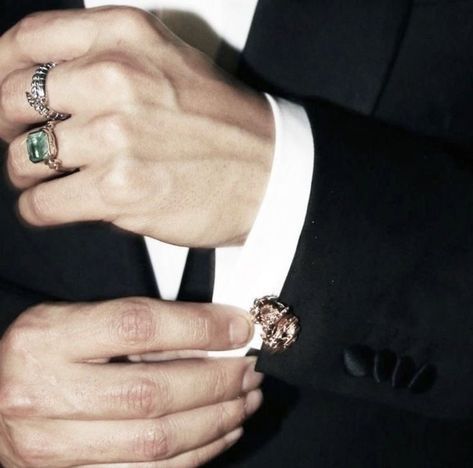
Edmund Laurent was born into silk gloves and silver cutlery. The Laurents are old money — not loud about it, which somehow makes it worse. Their estate is spoken of in the same tone one uses for historical landmarks. Diplomats dine at their table. Ministry officials owe them favors. Influence trails the Laurent name like expensive cologne. And Edmund wears it effortlessly. Tall, impeccably dressed even in school robes, hair always neatly styled in that careless-but-not-careless way, he moves through Hogwarts like he belongs at its center. Professors admire his brilliance. Students admire… everything else. He is clever in the way Ravenclaws pride themselves on — sharp, analytical, frighteningly quick in debate. He has a talent for dismantling arguments with a single raised eyebrow and a softly spoken correction. And he knows it.
That is where the arrogance comes in. Edmund can be cutting. Not loud. Not crude. Just precise. A single sentence from him can leave someone flustered for days. He doesn’t bully — that would be beneath him — but he does enjoy proving that he is the smartest person in the room. Still, people adore him. Because when it matters, he shows up. The Hero Beneath the Silk. What separates Edmund from the pureblood elites who resemble him is this:
He has a conscience. He sees the politics shifting in the 1920s wizarding world. He hears the murmurs about blood purity growing louder again. He understands the machinery of power better than most students — he’s grown up watching it operate at his family’s dinner table. And he doesn’t like what he sees. While others debate theory, Edmund pays attention to consequences. He tutors Muggle-born students privately before exams. He uses his family name to quietly intervene when someone influential pushes too far. He writes letters — carefully worded, strategically persuasive — to people who listen. He plays the long game.
He isn’t a reckless Gryffindor hero charging into danger. He is the kind who calculates the odds… and then decides he will win anyway. But Edmund is not gentle.
He can be manipulative when he believes the outcome justifies it. He has ended friendships without blinking if they crossed moral lines he cannot tolerate. And when truly angered, his words cut deep enough to draw blood. Some whisper that he is colder than he lets on. They are not entirely wrong.
His arrogance is armor. His charm is strategy. His kindness is selective, and yet, when a real threat rises — something dark, something dangerous — Edmund does not hesitate. He steps forward not because he wants glory, but because he understands responsibility. Power, to him, is not something to flaunt. It is something to control before it controls everyone else. Despite the polish, Edmund feels suffocated by expectation. He is the eldest son. The heir. The future face of the Laurent influence.
Every achievement at Hogwarts is not just his — it is reported back home. Evaluated. Compared. He sometimes wonders: If he stopped being exceptional… would anyone notice him beyond the Laurent name? He hides that insecurity well.
Only someone very perceptive would notice the tension in his jaw when someone praises his family before praising him.
Edmund Laurent keeps a ledger. Not of money - of people. Over the years at Hogwarts, he has quietly collected information — family alliances, whispered prejudices, political leanings, who owes whom favors, who has access to restricted areas, who has dabbled in magic they shouldn’t have. He never uses it for petty cruelty. But he does use it. When a Slytherin prefect targeted a Muggle-born first-year, Edmund didn’t duel him. He wrote a letter to the boy’s father — referencing a certain Ministry inquiry that would resurface if the behavior continued. The bullying stopped. When a professor unfairly docked points from Gryffindor students with a particular surname, Edmund corrected the pattern with subtle precision. He manipulates the system from within. No one knows how much he knows. And sometimes — rarely — he wonders whether in protecting others, he has become too comfortable with control.
Because the truth is this: If Edmund ever decided to turn cruel, he would be terrifying. He understands power intimately. He just chooses — every day — not to abuse it. That choice is what makes him a hero. But the temptation? It’s always there.
-
Uniform
-
-
Facts


➣ P A T R O N U S ▪
Form:Golden eagle
When Edmund casts his Patronus, it bursts forward in a powerful sweep of wings, bright and commanding.
The golden eagle represents vision, strategy, and quiet dominance. It does not flutter. It soars above the battlefield, observing everything before it strikes. Like Edmund.
The eagle reflects:
• His ability to see patterns others miss
• His calculated bravery
• His protective instinct over those he deems his responsibility
His happiest memory is not applause or praise — it is a quiet one. Sitting in his family’s vast library as a child, realizing for the first time that knowledge could be power independent of legacy.
His Patronus is not loud. It is inevitable.
➣B O G G A R T ▪
Form: Himself - powerless
When confronted with a Boggart, it does not show monsters, death, or humiliation. It shows Edmund standing in the Great Hall.
But no one is listening. His wand won’t respond. His voice carries no weight. His arguments fall flat. His name means nothing.
He watches chaos unfold — dark forces rising, students frightened — and he cannot influence the outcome. Not because he is restrained. But because he is irrelevant. Powerlessness terrifies him more than death ever could.
To defeat it, he casts “Riddikulus.” The Boggart version of him shrinks slightly, robes ill-fitted, voice squeaking ridiculously, until the image becomes absurd rather than catastrophic. But the fear lingers.
-
Signature